
Reno projects are a massive undertaking, there is no denying that. Whether you’re doing one room or your whole house, there are so many things to do, remember, keep track of, shop for, order and eventually execute! Over the course of our last few projects we have learned a thing… or 7,538, which we have compiled into our Master Reno List that we use for every project! Hopefully our tips in this post will come in handy for your next project!!

1. Create a master reno binder.
We love a binder (we talked about our reno binder in this post too!) especially for our renovation projects. Each project gets its own binder, there are so many pros to having a physical binder for a reno, and being able to put pen to paper. Not only does a binder give you a tangible space to store any paper you collect over the project; (and trust me, there is lots!!) spec/tear sheets, receipts, business cards, measurements, fabric samples, timelines, the all important budget, sketched out ideas. etc. and storing all this info in one binder means its always right at your fingertips. This is especially helpful when it comes to communicating plans, designs and ideas to various people you’re working with: sales people, contractors, trades etc. A binder is also an easy way to take paper to and from the job site! And that little pocket in the front is great for holding many different things… tiles, paint samples, wallpaper samples… We love our binder!!



2. Budget contingency.
The rule of thumb in the construction world when it comes to your budget is that the contingency amount should be 10%, based on your overall budget. So if your project budget is $100,000.00 you should keep aside $10,000.00 if and when something unexpected pops up. However, here at Hallo Haus Studio we like to err on the side of caution and always keep 15-20% of our overall budget aside for any issues that may arise! In our experience, it’s way better to have extra wiggle room when something goes really wrong, and you won’t have to scramble and pull funds from somewhere else… we don’t want to have to eliminate our beautiful tile, or upgraded stove if we find mold or a faulty roof. And if your project goes exactly to plan (dream world!!) and you didn’t need to use any/all of your contingency, you now have that money for something else! Girl math says that’s “free” money now, aka time to go shopping haha!!3. Electrical.
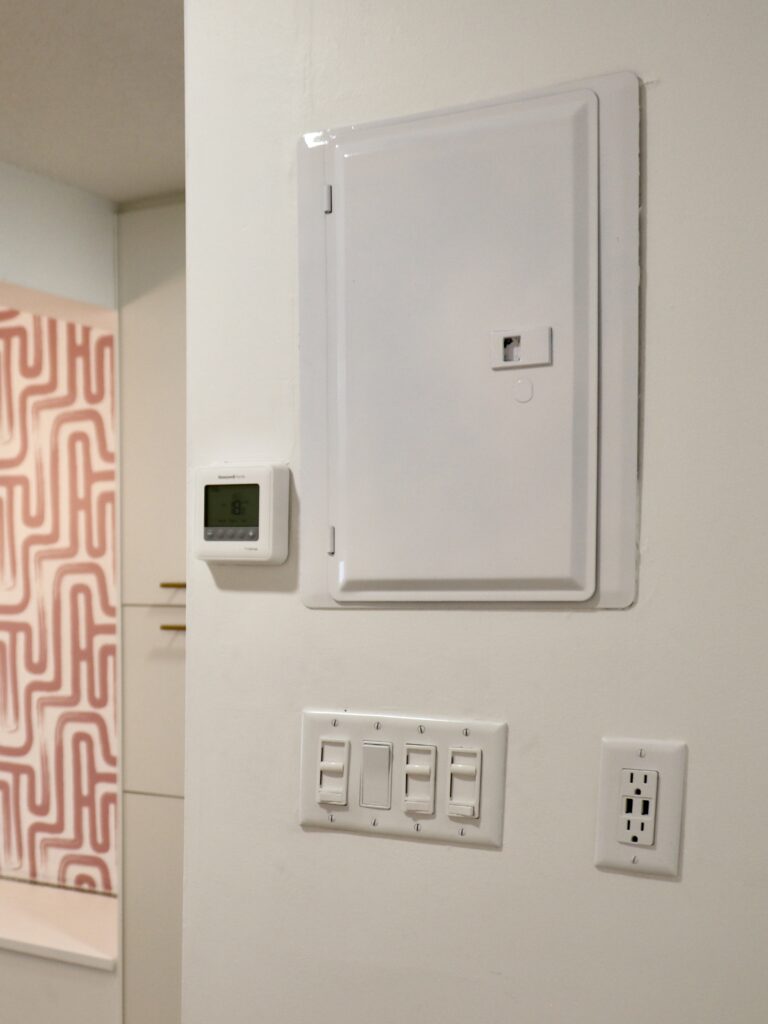
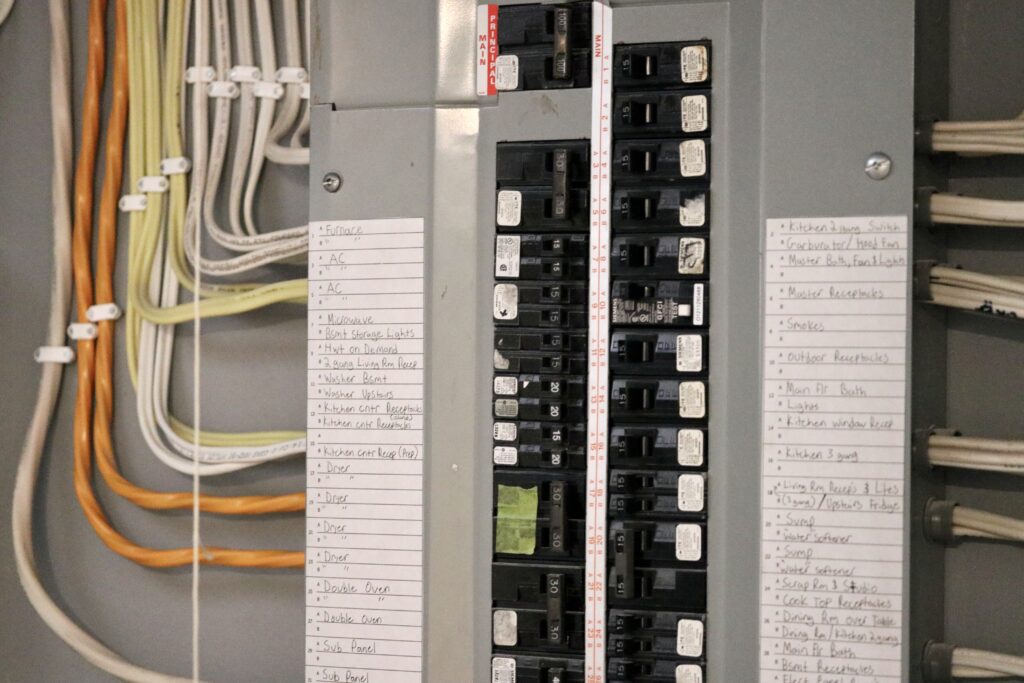
The secret problem child when it comes to a reno: electrical. Electrical seems simple; it’s so fun to pick light fixtures and then you just install them right? Maybe… once that hole is cut in your ceiling for your gorgeous new kitchen table pendant and it’s hung up and then you place your furniture and realize your light is 5″ off centre, that’s not an easy fix!! The reality is most electrical lives behind walls and cannot be changed easily or inexpensively if it’s wrong. When you’re in the middle of the dust and open walls, this is the time to make sure you’ve got it right, and then double and triple check that you’ve got it right and you’re happy with it! Double check things like where the light switch in a room should be, make sure you have enough outlets in your kitchen, bedroom etc. (sometimes you want more than is required by code!) and check and double check where you are locating overhead lights! Sadly, we’ve made electrical “mistakes” on every project, but that is for another post!!

4. Meet and get to know your tradespeople/contractors.
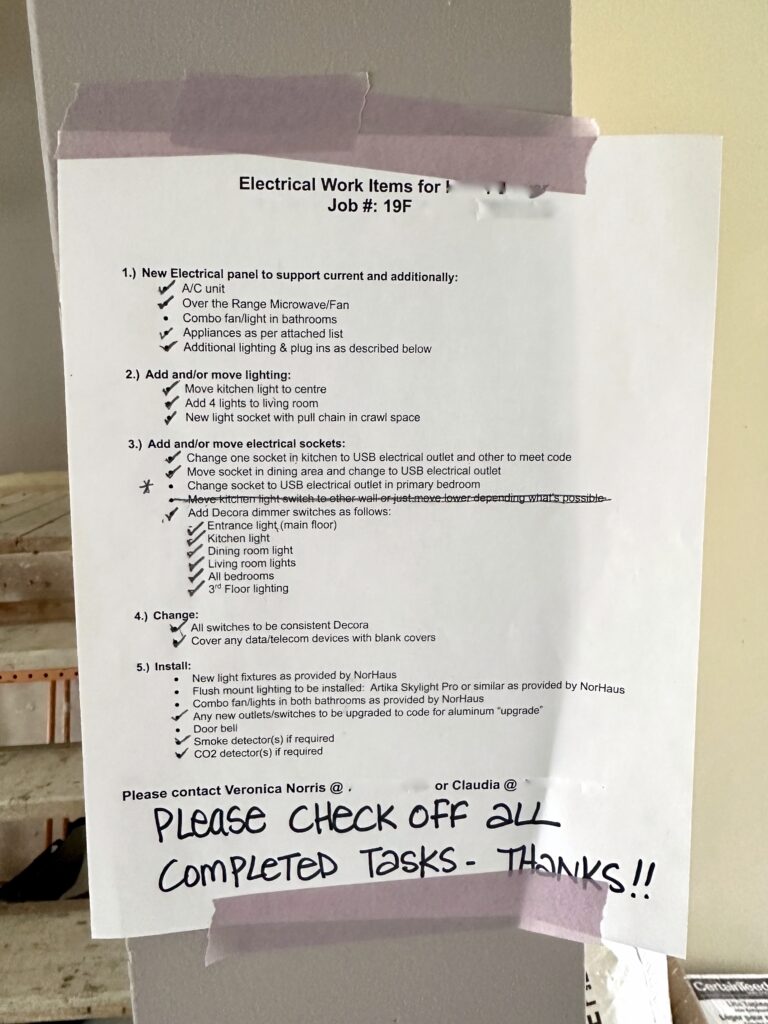
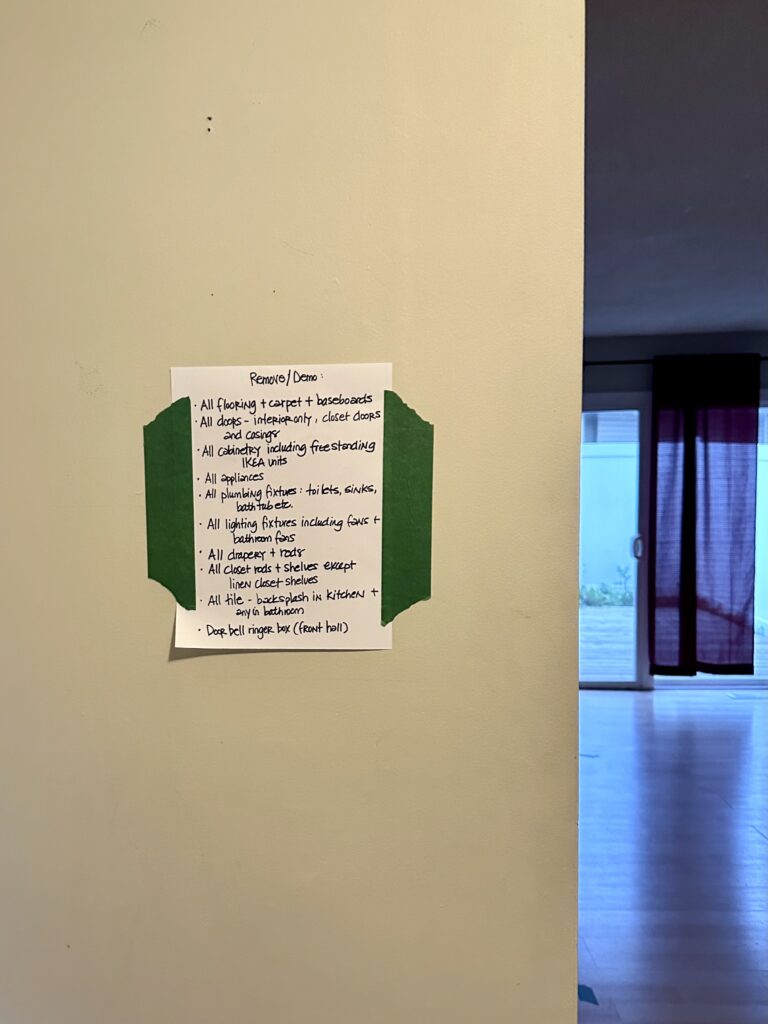
Tradespeople and contractors can be inconsistent from project to project, even if you repeatedly use the same company for something like heating or plumbing, the person they send might be different! So being on site and meeting all the tradespeople/contractors on their first day with you is important. You can talk to them and explain your plan in person, ask questions you have, confirm how long they expect to be on site, and make sure everyone is on the same page with what is happening/needs to be accomplished. We create checklists for them that we go over together, and then that checklist gets left at site, this is a helpful reminder and visual to keep everyone on track as well! This is especially important for hard finishings that are expensive to change if mistakes are made: tile installation, light fixture placements, wallpaper, cabinet install, flooring and don’t forget the electrical!Haus Tip:
Speaking of tradespeople and contractors, we always have a 10% hold-back (an industry standard) included in our payment schedule. Don’t be afraid to ask for this up front when discussing your payment schedule with anyone you hire, including a GC, if that’s the route you take. This hold-back keeps your contractors accountable and gives you the ability to make sure all work is completed as agreed upon. This hold-back has saved us several times, when we’ve had to have a contractor return for something not completed properly. It’s hard to have someone come back when they’ve been paid in full!5. Keep a consistent and detailed written record during your project.
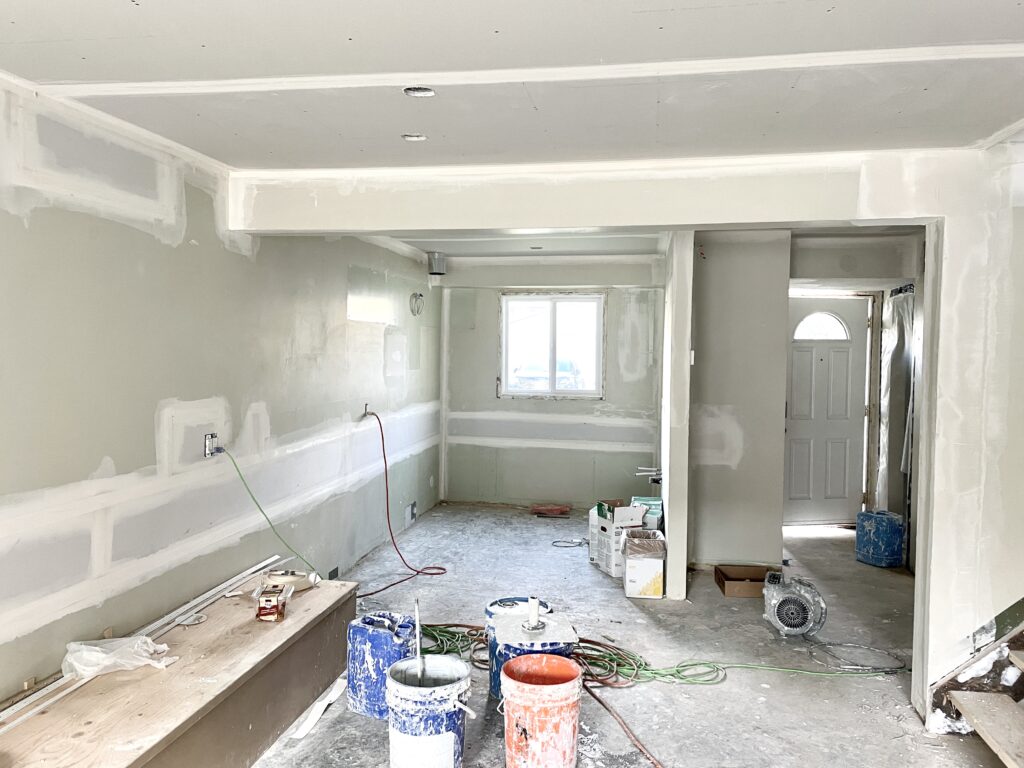
We keep a daily and weekly written record of what trades were at our project, documenting when, and what they did. This may seem silly, but it is really so helpful to keep everyone on track and accountable, but also great to have if there is ever a dispute with a trade, you will have a record. We have our on-site check list, and then a personal list of who/what/when in our, you guessed it, binder!! We always think, oh I’ll remember this, but trust us, in a reno project the days and weeks blend together. We also take progress photos every time we go to site, both for our own records/to see where were at, but this is also visual “proof” if something has gone wrong and you have to have a hard convo with a contractor. Keep these photos in a labeled folder in your photos app for easy reference!

6. Order any long lead items as soon as you can.
We talk more about our haus rules on shopping for long lead items and hard finishings here, but once you are locked down and decided on your choices for things like the cabinets, flooring, tiles, plumbing and electrical fixtures, appliances, place that order!! You never know if the tub you love will be sold out and forever out of stock when you need it, or if the flooring you chose needs 12 weeks to get made!7. Check all items as soon as they arrive to the jobsite.
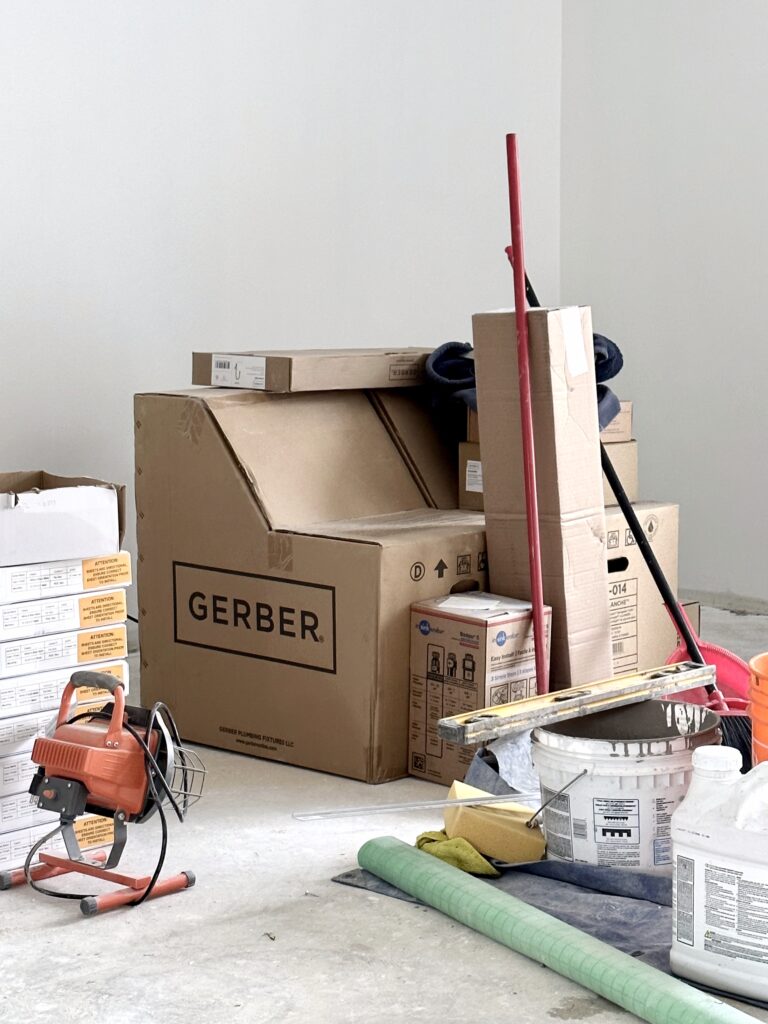
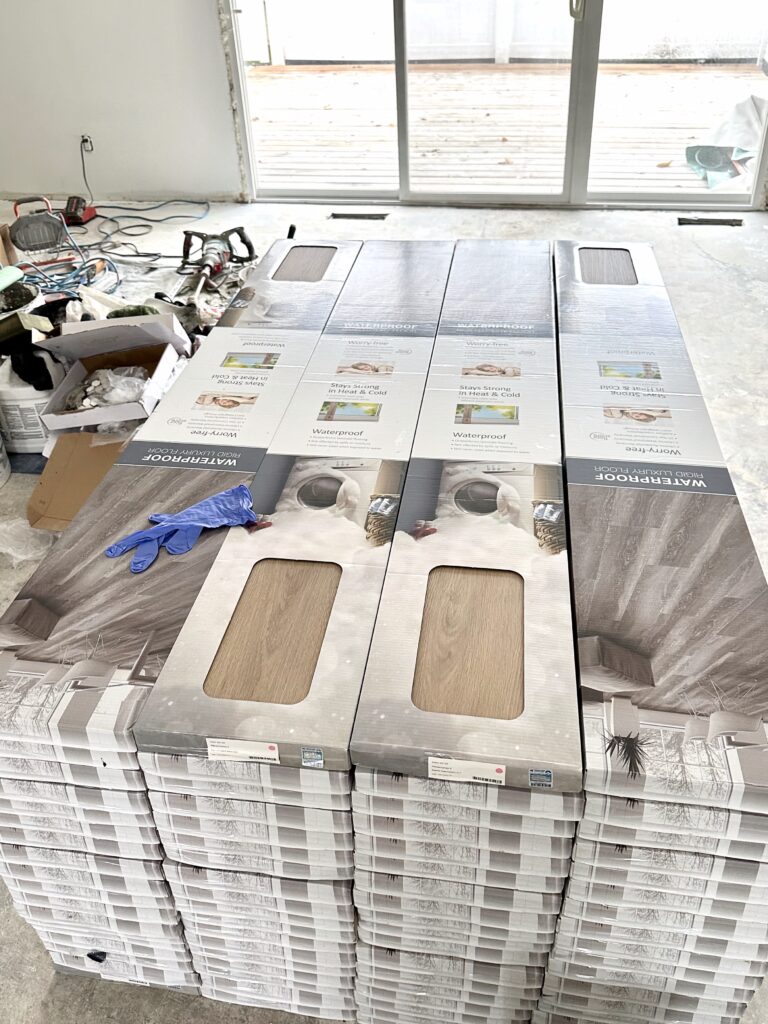
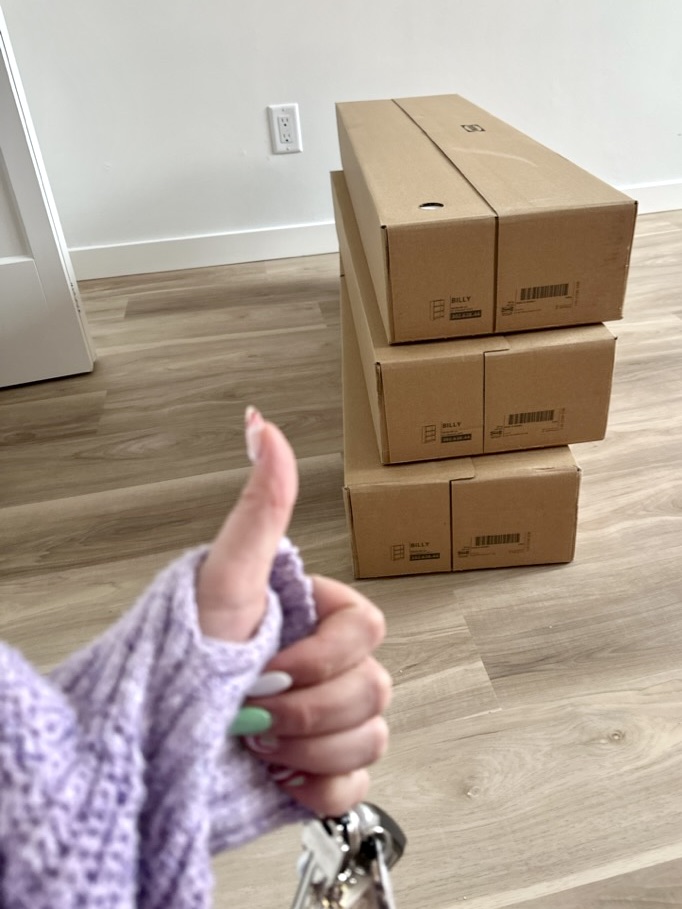
Open all the packages and boxes that get delivered WHEN they arrive! This is everything, hard finishes, appliances, soft furnishings… things can arrive broken or damaged, they might be the wrong colour, or the completely wrong item!! We’ve had tiles and mirrors arrive broken, appliances delivered in the wrong colour, and items missing parts. And if you can have the correct trade open items with you, they often can tell right away if something is amiss. We ordered the cutest faucet for Claudia’s bathroom, and when we opened it with our plumber he right away said it was missing some very important do-hickey! Something like that, we wouldn’t have known or spotted on our own. You also don’t want to miss the return/replacement window depending on the suppliers’ terms. If you don’t open your flooring for 6 weeks, and when you do it’s wrong, it will probably be very hard to get a replacement or refund.
8. The building trifecta: TIME, BUDGET & QUALITY
As much as we wish we had an unlimited budget, in a world where time is irrelevant and quality is always top shelf… the reality is we don’t. We learned this lesson very quickly… you can really only pick two of these when it comes to any reno project. If you want to complete a project on time, you may have to adjust your budget. If you want to stay on budget, chances are you’ll have to forsake some quality, because higher quality usually = more money and/or time for manufacturing. It’s important to decide which of these is your non-negotiable and then adjust your expectations around the other two accordingly!
All of these rules were created out of experience and some learning lessons across our projects! We constantly return to this list, especially at the start of a new project. Organization and preparation is always beneficial with any big project, so hopefully our haus rules help you with that!
Let us know in the comments if you have any reno rules you live by, we’d love to hear ’em and maybe even add them to our list!






Leave a Reply